

What exactly is calisthenics?
Calisthenics is strength and movement training that uses your own body as the main resistance. Push-ups, pull-ups, squats, lunges, dips, planks and balances are all part of it. The goal is not simply to move a number on a machine: it is to build control, strength, coordination and confidence in your own body.
You can practise with no equipment at all, then add a floor, a bar, rings or parallel bars as your level grows. That is why calisthenics can work in a living room, a park or a dedicated training facility.
Where does the word calisthenics come from?
The word has roots in the ancient Greek terms kalos (beautiful) and sthenos (strength). Modern calisthenics developed through physical-education methods that became widely taught during the nineteenth century. Its original idea is still recognisable today: develop a capable body through deliberate, repeatable movement.
Today, calisthenics brings together basic strength work, mobility, gymnastic-style control and, for many athletes, demanding skills such as handstands, muscle-ups, front levers and planches. The methods have evolved; the principle has not.
Calisthenics and street workout: what is the difference?
The two terms overlap, but they do not mean exactly the same thing. Calisthenics is the broad practice of bodyweight training, wherever it happens. Street workout is a contemporary culture and sport that grew around outdoor bars, public parks, freestyle expression and a strong community spirit.
In other words, street workout uses calisthenics as one of its foundations. You can train calisthenics at home or in a gym; when athletes meet around outdoor equipment to train, share skills and express movement, they are part of the street-workout scene too.
Why start with bodyweight training?
Bodyweight exercises make it easy to adjust difficulty without losing the movement pattern: an incline push-up can become a floor push-up, assisted pulls can become pull-ups, and a supported squat can become a single-leg progression. This gives beginners a clear path while leaving room for experienced athletes to keep progressing.
Good calisthenics is not about rushing towards spectacular skills. It starts with sound technique, regular practice, recovery and progressions that match your current level. A well-built foundation makes every later movement more enjoyable.
How can a beginner start?
Start with a short, repeatable session two or three times a week: a pushing movement, a pulling movement, a squat or lunge, a core exercise and a little mobility. Choose a variation you can control, stop before technique breaks down and progress gradually.
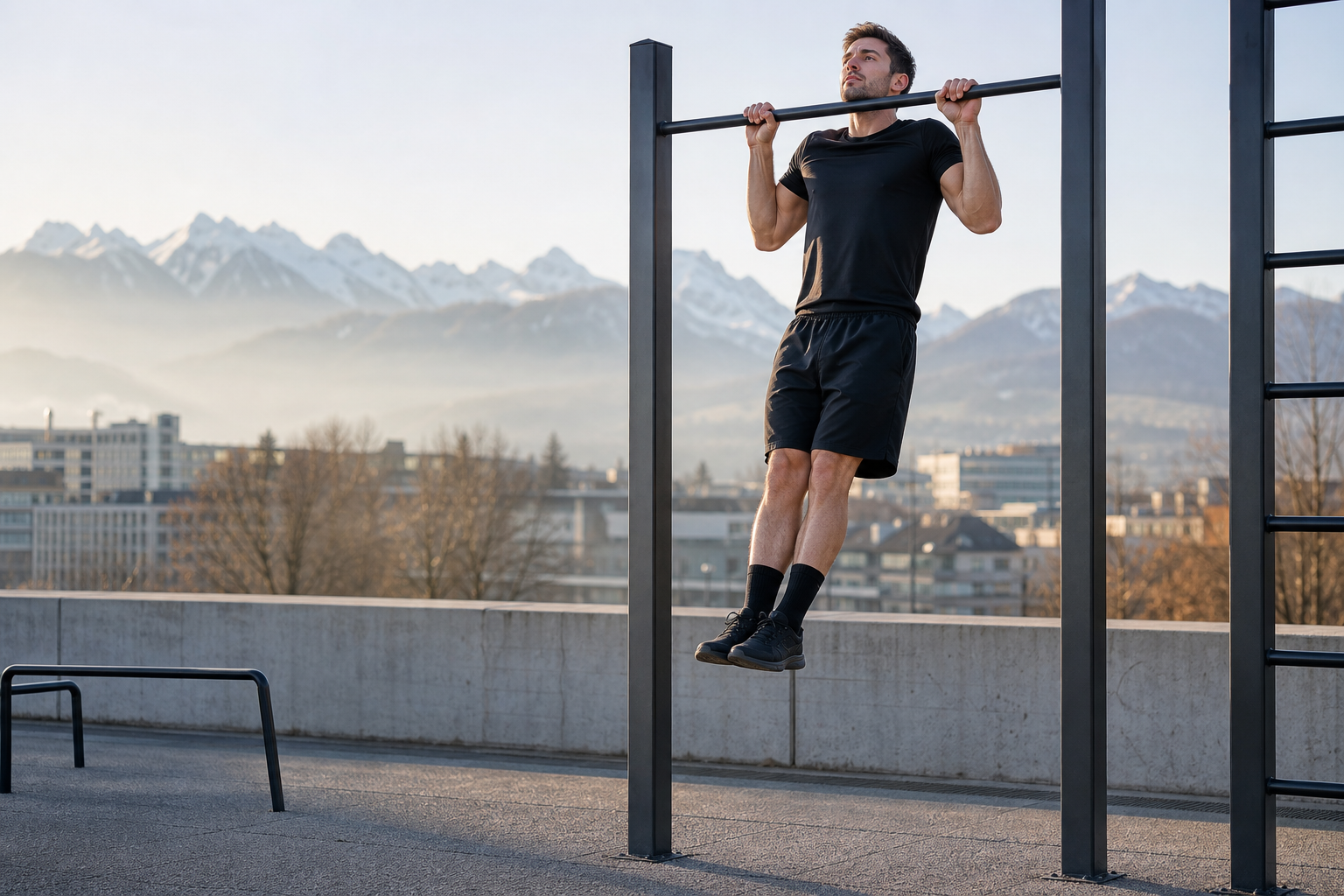
Outdoor facilities are ideal for discovering the discipline because bars, low rails and open space offer many variations. Training with other people can also make the first steps less intimidating: ask questions, share progressions and learn how the equipment is used respectfully.
Calisthenics in Switzerland: a sport built together
For Swiss Street Workout, calisthenics is more than a training method. It is an accessible entry point into a community that values movement, mutual support and long-term progress. Whether your goal is your first pull-up, a cleaner handstand or simply moving more often, there is a place for you.
Our role as a federation is to connect athletes, clubs and local initiatives so that this practice can keep growing across Switzerland—in French, German and Italian, and at every level of experience.